SMU Staff Member Co-Authors Textbook Chapter Advancing Inclusive Simulation
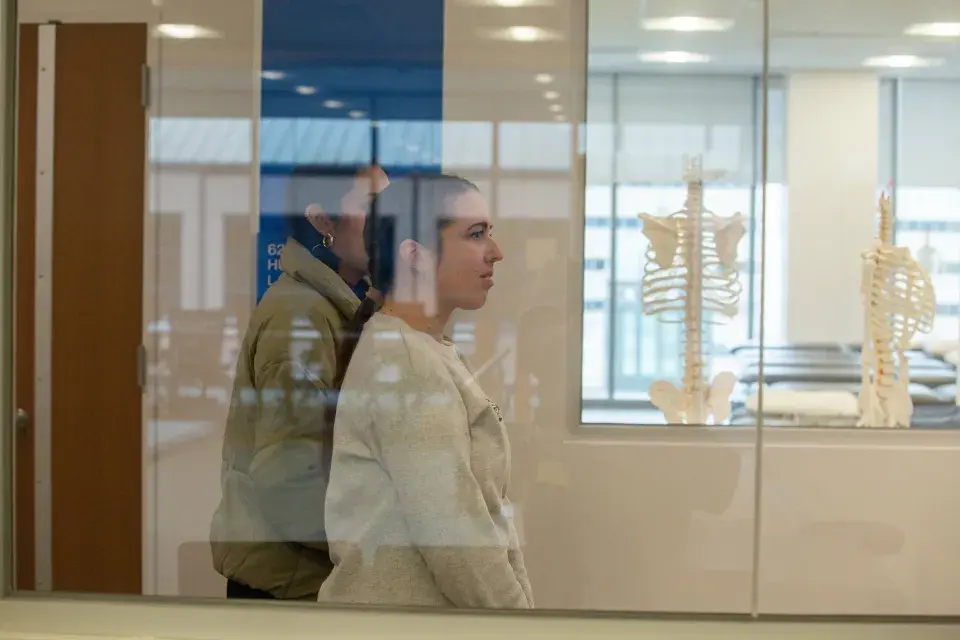
Lauren O’Niell (they/them pronouns), Lead Simulation Technology Specialist at Samuel Merritt University (SMU), recently co-authored a chapter that advances best practices in healthcare simulation for diverse patient populations. The chapter, titled “Fostering LGBTQIA+ Inclusive Simulation,” was published this January as part of Springer’s Comprehensive Healthcare Simulation textbook series in the volume Educating Providers to Care for a Diverse Patient Population. This work aligns closely with SMU’s mission to educate compassionate, inclusive healthcare providers and represents a significant scholarly contribution by an SMU staff member.
About the Chapter
In developing the chapter, O’Niell and their co-author, Samantha Davis, began with an extensive literature review which revealed a critical gap in healthcare simulation research: there were no published standards of best practices for fostering inclusive experiences for the LGBTQIA+ community in healthcare simulation. In response, O’Niell and Davis adapted existing simulation best practices—which focused mainly on psychological safety—and applied them to the care of diverse patient populations.
They examine how cis-heteronormative assumptions in healthcare simulation can contribute to inequities for LGBTQIA+ patients and outline practical strategies for creating more inclusive learning environments. Recommended practices include inviting all participants to share their pronouns, using gender-inclusive language, maintaining an expectation of respect for everyone’s names and pronouns, and ensuring that sexual and gender diversity are visible within simulation spaces.
Grounded in research documenting health disparities affecting LGBTQIA+ communities, the authors explore how to responsibly introduce LGBTQIA+ themes into simulation scenarios—for example, caring for a patient who is transitioning but hospitalized for an unrelated condition—without overemphasizing identity in ways that risk stereotyping or tokenization.
While O’Niell focused on the operational and implementation aspects of inclusive simulation, Davis, a respiratory therapist, addressed educational design, including learning objectives, debriefing strategies, and how to thoughtfully integrate LGBTQIA+ identities into simulation scenarios.
Drawing on their experience in simulation operations at SMU, O’Niell outlines guidelines for recruiting and supporting LGBTQIA+ simulated participants and emphasizes the importance of inclusive administrative practices, such as updating intake forms to collect pronouns, preferred names, and gender identity information.
They conclude the chapter by underscoring the broader responsibility of simulation, writing that “by recognizing and challenging cis-heteronormative assumptions, simulationists can contribute to dismantling oppressive systems that undermine our work.”
Lauren O'Niell's Work Toward Gender Inclusivity at SMU
When Lauren O’Niell joined Samuel Merritt University almost eight years ago, they were new not only to healthcare simulation but to higher education altogether. With a BFA in sculpture, O’Niell had spent years managing an independent bookstore before making the transition to SMU. Early in their tenure, O’Niell sought to introduce more gender inclusive practices in the simulation center but quickly encountered structural challenges: students were often being exposed to gender-inclusive concepts for the first time during simulation itself, faculty varied in their familiarity with inclusive practices, and simulation was already an unfamiliar learning environment for many students. Those experiences became the foundation for O’Neill’s broader engagement with the healthcare simulation community and eventually informed their work on the textbook chapter.
Focused on making practical, operational changes that have lasting impact, the Health Science Simulation Center (HSSC) has worked towards LGBTQIA+ inclusivity, starting with former Executive Directors, Jeanette Wong, and current Executive Director, Krista Anderson. With the collaboration of HSSC team members, Sierra Marcum-Gonzales, Rachel True, and Carlos Joy, O’Niell has worked to revisit simulated participant hiring practices and update internal data systems to become more gender inclusive.
O’Niell is also a member of SMU’s LGBTQIA+ Working Group, which focuses on advancing gender-inclusive practices and supporting curricular change across the University. Established in early 2023, the Working Group brings together campus members who meet monthly to collaborate on projects that move the University forward. A key accomplishment of the group was the introduction of optional pronoun badges for HSSC staff, which later expanded to the entire university community.
Looking ahead, O’Niell hopes to continue partnering with faculty to develop additional inclusive simulation scenarios, while remaining grounded in a philosophy of incremental change. “I think right now, my focus is on the small things that are impactful in a big way,” they reflected.
Navigating Change in a Complex Landscape
O’Niell is candid about the challenges involved in advancing inclusive simulation. Meaningful change often requires curricular alignment, faculty development, and time. “I’ve been working on it for most of the eight years I’ve been here,” they acknowledge.
Despite these challenges, the demand for this guidance continues to grow across the field. “I think people are hungry for this content,” O’Niell notes, “especially in simulation.” The textbook itself reflects this shift, emphasizing preparation to meet the needs of diverse patient populations while still addressing equity-driven goals.
O’Niell is optimistic about the impact the textbook and their chapter will have on SMU, commenting that having more faculty across SMU look at not just their chapter, but the whole book and take interest in curricular change “would be wonderful.”
Looking Ahead
O’Niell emphasizes the importance of embedding inclusive practices into everyday simulations, beginning with simple but intentional actions such as sharing pronouns during introductions and inviting students to do the same. They reflected on past conversations with students who told them, “until you introduced yourself using your pronouns, I didn't understand why that was important.” By working closely with faculty, they help integrate these moments into simulation scenarios so learners can practice creating a space for patients.
In other conversations with students, O’Niell has shared reflections from learners who found that practicing pronoun sharing in simulation helped them better understand its importance and recognize how small, intentional actions can support seeing patients as fully human individuals.
“My big hope for the chapter is that it gets people thinking about the small things that they can do that can have a really big impact,” they share. While many of the larger changes that they’d like to see—how queer, trans, and intersex people are treated in healthcare—will take time, O’Niell is focused on the small acts that “keeps us moving on the slow road to larger change.”